
Product Update July 24, 2026
We're pleased to announce the inclusion of user information in certain Record and Record History API responses and a preview of upcoming features.
User Information in the Record and Record History APIs
The response bodies for the unmerge records and list record history operations now include a user object that provides the userId and email for the user who committed the record change.
Coming Soon! Preview Upcoming Features
Improved Source Records Section on 360 Pages
We're improving the styling and functionality of the Source Records section on 360 pages for all data products.
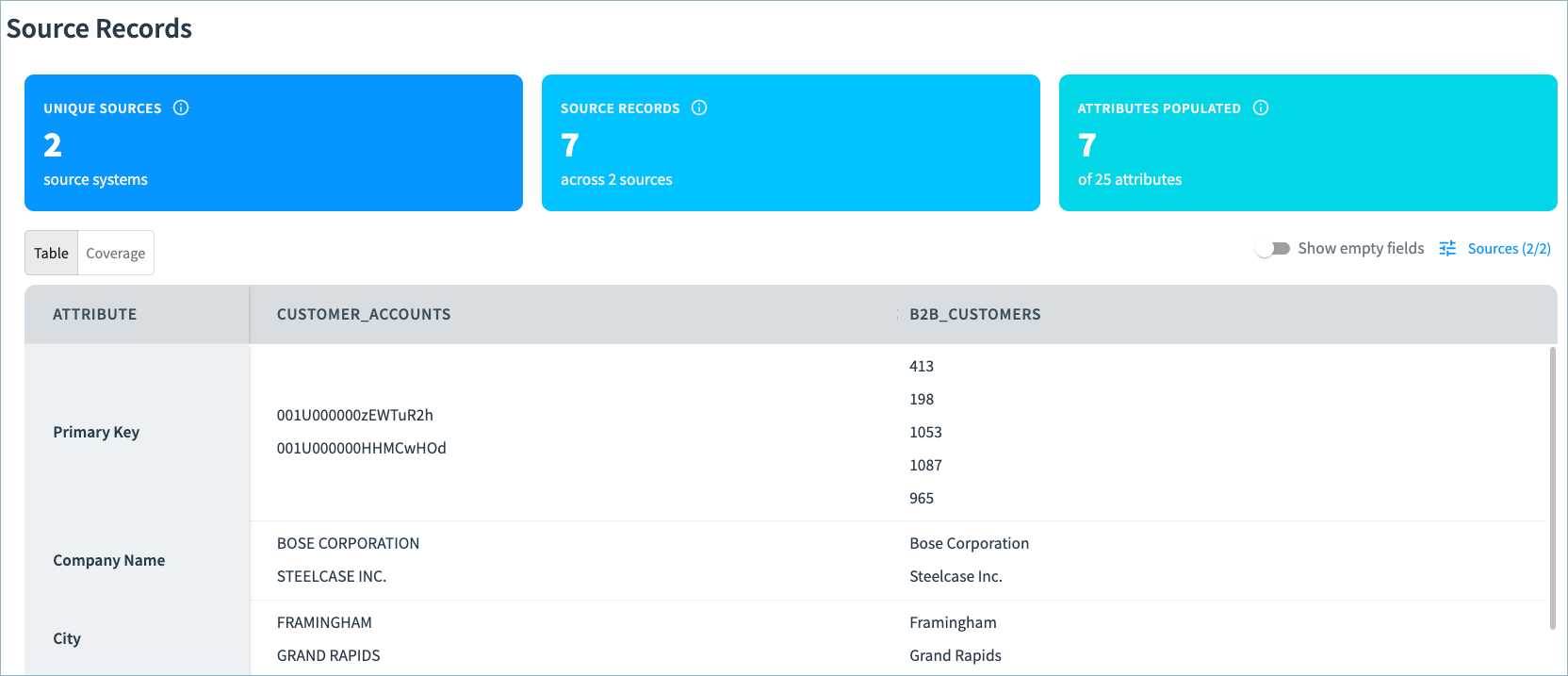
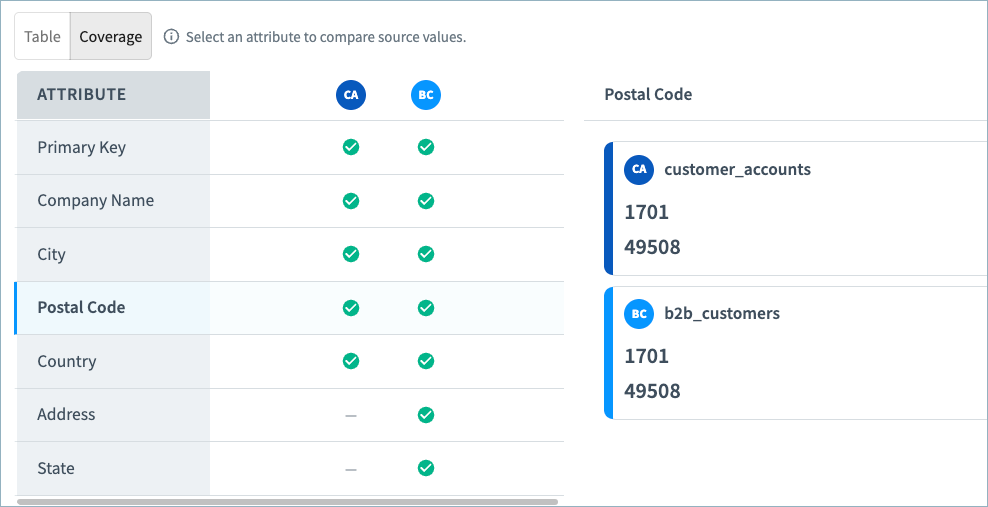
You'll be able to filter which data sources to view. In the new Coverage tab, gain insight into the completeness of your source record data and easily compare attribute values by source.
Upcoming RealTime Data Product Features
These features will be available soon in limited release RealTime data products.
Tune Your Match Results with Match Rules
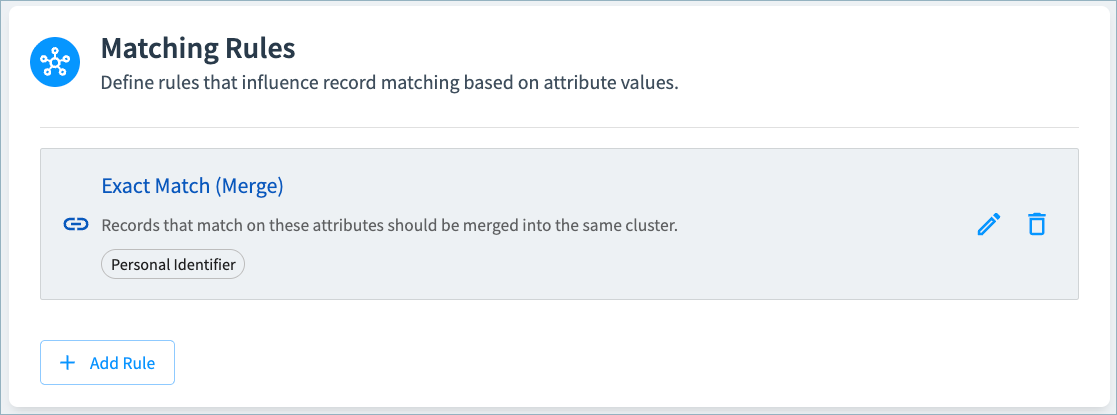
Match rules rules deterministically identify records that should or should not be matched together based on matching or non-matching values in specified attributes.
For example, you might want records with the same Personal Identifier value to be matched into the same cluster, as shown below.
You will be able to create the following types of rules:
- Exact Match (Merge): If records have matching non-null values for the selected attributes, they will be clustered together.
- Mismatch (Split): If records have different non-null values for the selected attributes, they will not be clustered together.
- Both: Apply both exact match and mismatch rules to ensure that all records in a cluster have the same or null value for the selected attributes.
If you add multiple rules, the rules higher in the list take precedence over the rules lower in the list.
Calculate Uniformity Scores
Uniformity scores (High, Medium, Low) indicate the similarity of clustered source record values to the golden record values, and can help curators identify clusters requiring further review and refinement. These scores will be available on 360 pages.
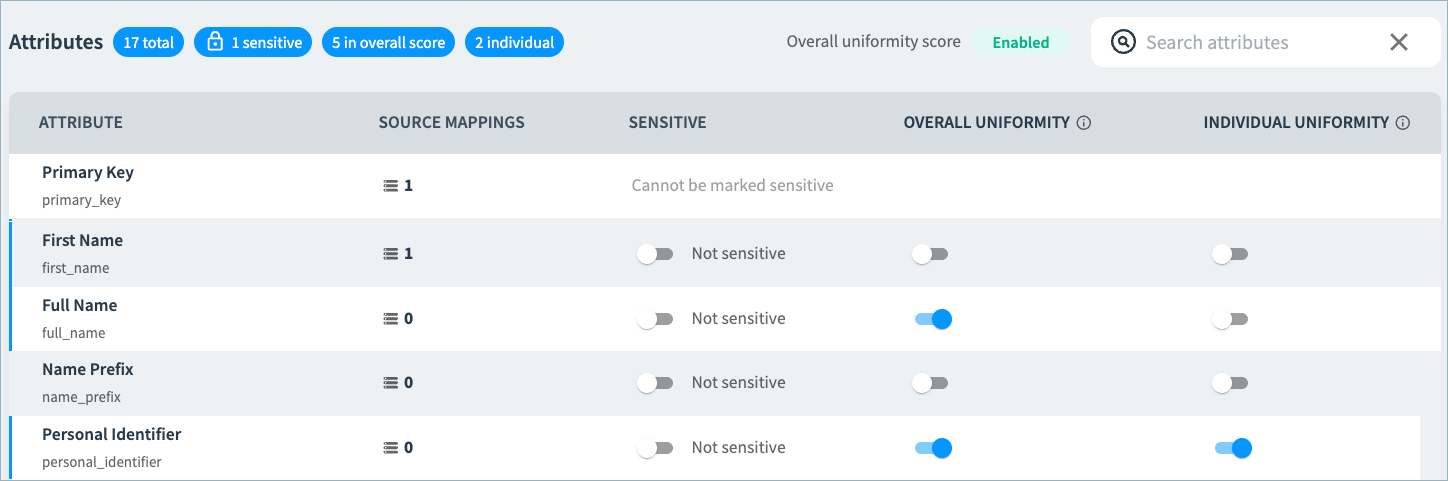
You will be able to configure an overall uniformity score for the cluster, choosing which attributes to include in the calculation. Additionally, you will able to calculate uniformity scores for selected individual attributes.
In the example below, Full Name and Personal Identifier are included in the overall uniformity score. An individual uniformity score is calculated for the Personal Identifier field. Curators may want to investigate clusters with low uniformity to verify that all records in the cluster represent the same entity.
New Workflows for Onboarding Data Sources and Deduplicating Your Data
With the new Onboarding workflow, you'll be able to easily add new data sources to your RealTime data products. With this workflow, a golden record is created for each source record. You'll then be able to run the new Review workflow to identify duplicate records. High confidence matches are automatically merged, while medium confidence matches are routed to the Suggested Duplicates queue for curator review.
Configure Enrichment and Data Quality
Soon, you'll be able to configure data enrichment for RealTime data products, including configuring address, phone, and firmographic enrichment. You'll also be able to set data standards such as specifying country and state formats, normalizing phone formats, and removing known placeholder or bad values from specified attributes.